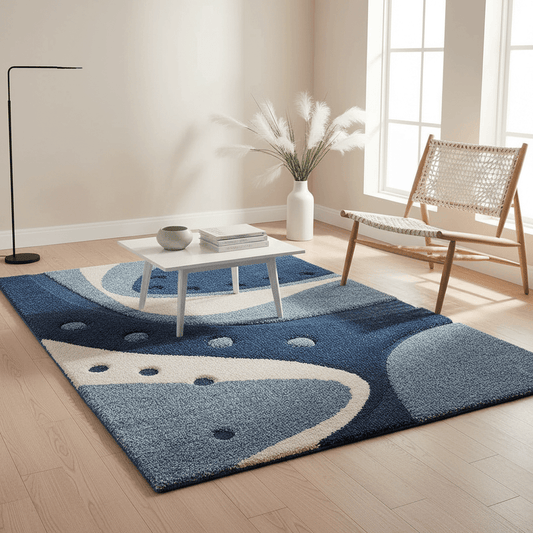
Artificial Grass for Balcony: Cost, Installation and Maintenance

A balcony is usually the smallest space in the house and the one people give up on first. Bare tiles look harsh, real plants need daily attention, and wooden decking is expensive. Artificial grass for balcony floors solves all three problems in an afternoon, at a cost most people are surprised by.
This guide covers what it costs, how to measure and lay it yourself, and how it holds up through an Indian summer and monsoon.

Quick answer
For a balcony, 35mm or 40mm artificial grass is the right choice — soft enough to sit on, tall enough to look like a real lawn. Our rolls are 6.5 ft wide, cut to your length, and prices start at ₹1,799 for 35mm and ₹1,999 for 40mm. Most balconies need one piece, no adhesive, and about an hour of work.
Why artificial grass works so well on balconies
Balconies are hard surfaces in a small footprint, which is exactly where synthetic grass performs best:
- It covers ugly tiles completely without any civil work, and it lifts off again if you are renting.
- It cools the visual temperature of the space. A green floor reads as a garden even when there is nothing else on it.
- It is comfortable barefoot, which is the difference between a balcony you walk onto and one you actually sit on.
- It needs no water, no sunlight and no mowing — the three reasons balcony gardens usually fail.
- It is safe for children and pets, with a softer landing than tile or stone.
What it costs for a balcony
Grass is sold off a roll that is 6.5 feet wide, cut to whatever length you ask for. So your cost depends on the running length you need, not on complicated square-foot maths.
| Thickness | Starting price | Suits |
|---|---|---|
| 25mm | ₹1,549 | Narrow strips, doormats, décor panels |
| 35mm | ₹1,799 | Everyday balcony use — the popular pick |
| 40mm | ₹1,999 | Balconies you sit on, kids and pets |
| 50mm | ₹2,599 | Large terraces and premium lawn look |
A standard apartment balcony of roughly 6 × 8 ft usually takes a single 6.5 × 8 piece. Nothing else is strictly required — on a sheltered balcony the weight of the grass and a few strips of double-sided tape at the edges hold it in place.
Measuring your balcony correctly
Measure at the widest and longest points, including any alcove, and note where the drain outlet sits.
- Balcony narrower than 6.5 ft — order 6.5 ft wide by your length and trim the excess width. This is the most common situation.
- Balcony wider than 6.5 ft — you need two pieces. Lay them with the pile running in the same direction, or the seam will catch the light and show.
- L-shaped balcony — measure it as two rectangles, order both lengths, and join along the shortest edge.
Add about three inches of margin on each side. Trimming is easy with a sharp blade from the backing side; you cannot add material back.
Laying it yourself: an hour's work
Thickness is the single biggest cost lever for artificial grass for balcony floors. These are our live rates.
| Thickness | Per sq ft | Suits |
|---|---|---|
| 25mm | ₹38 – ₹44 | Balcony display, door mats, shop windows |
| 35mm | ₹42 – ₹51 | Balconies with light footfall, small terraces |
| 40mm | ₹40 – ₹62 | Daily use, play areas, roof gardens |
| 50mm | ₹55 – ₹80 | Lawn look, events, premium terraces |
- Clean the floor completely. Sweep, wash, and let it dry. Any grit left behind will be felt underfoot later.
- Check the drainage slope. Water must still be able to reach the outlet. Never block a balcony drain.
- Unroll and let it settle. Leave the grass flat for a few hours — preferably in sunlight — so roll creases relax.
- Dry-fit before cutting. Position the piece, mark the edges from the back, then cut with a utility blade along the stitch lines.
- Fix the edges. Double-sided tape at the corners and along exposed edges is enough for most balconies. Use adhesive and seam tape only where two pieces meet or where wind is strong.
- Brush the pile upright with a stiff broom. This one step is what makes a new installation look professional.
Send us your balcony measurements
Tell us the length and width and we will confirm the exact roll size to order, including how much to trim. Browse the full range in our artificial grass collection — cut to size and delivered across India.
How it handles Indian weather
Summer
UV-stabilised grass holds its colour through direct sun. The surface will feel warm in peak afternoon — as any outdoor flooring does — and cools quickly in the evening or after a light rinse. A partly shaded balcony stays comfortable all day.
Monsoon
Good artificial grass has perforated backing so water drains straight through to the floor beneath. The important part is the floor's own drainage: if your balcony holds water, the grass will hold it too. Lift the mat once during the season, let the tiles dry, and put it back.
Winter and dust
Dust is the main issue in northern cities. A rinse with a bucket or hose, then a brush once dry, restores the colour. In a covered balcony this is needed only every few weeks.
Maintenance: honestly, very little
- Brush the pile upright occasionally, especially along walking paths.
- Rinse when dusty, and let it dry naturally.
- Lift it twice a year to clean the floor underneath — this also prevents any damp patch from settling in.
- Move furniture slightly from time to time so the pile does not compress permanently in the same spots.
- For pets, rinse the area and use a mild enzyme cleaner when needed.
Designing the balcony around the grass
Grass on its own already transforms the space, but a few additions make it feel finished: a low bench or two floor cushions, a couple of tall potted plants in the corners, string lights along the railing, and a small side table. Because the floor is now soft, people actually sit down — which is the entire point of the exercise.
If you want the same green effect on an indoor wall or a shaded corner, our moss carpets give a similar look without the outdoor build.

Is it worth it?
For the cost of a single mid-range piece of furniture, an unused balcony becomes usable floor space. It requires no permission, no civil work and no ongoing care, and it can be lifted and taken along if you move. For renters especially, it is one of the few upgrades that is genuinely reversible.
For a neutral technical background on how synthetic turf is made, see this overview of artificial turf.
Artificial grass vs the other balcony flooring options
Grass is not the only way to cover balcony tiles. Here is how it compares with what else people consider.
| Option | Strength | Watch out for |
|---|---|---|
| Artificial grass | Soft underfoot, green all year, removable, no upkeep | Needs the floor below to drain properly |
| Wooden deck tiles | Premium look, easy click-fit | Costs more, and untreated wood weathers in monsoon |
| Outdoor mats and rugs | Cheapest, quick to swap | Holds water, fades fast, looks temporary |
| Real grass and planters | Genuinely living, improves air | Daily watering, drainage mess, needs sunlight |
For a rented flat, artificial grass wins on one point alone: you can lift it, roll it and take it with you.
Five mistakes we see on balcony installations
- Blocking the drain. Always keep the outlet clear. Cut a neat opening around it rather than covering it.
- Laying it on a wet floor. Trapped moisture is the fastest route to a smell. Let the tiles dry completely first.
- Gluing the whole surface down. Unnecessary on most balconies, and it makes lifting for cleaning almost impossible. Tape the edges instead.
- Mismatching the pile direction when two pieces meet. Stand at the door and check both pieces lean the same way before fixing them.
- Buying by price alone. A thin, low-density roll at a tempting rate flattens within a season and ends up costing more.
What about pets and children?
Artificial grass is one of the better balcony surfaces for both. It is softer than tile if a toddler falls, it does not get slippery when damp the way polished stone does, and it gives pets a familiar surface. For dogs, rinse the area regularly and use an enzyme cleaner occasionally — plain water alone leaves odour behind. Choose 35mm or 40mm here; the extra pile gives more cushioning than 25mm.
Two practical notes before you order artificial grass for balcony use. Measure the balcony at its narrowest point, not its widest, and buy artificial grass for balcony floors in one piece where the width allows — a single roll has no seams to lift.
Artificial grass for balcony floors, in stock
These rolls are the ones we recommend most for artificial grass for balcony projects, in the widths that fit a standard balcony with the least waste.


Free shipping
Across India, taxes included
Dispatch in 24 hours
Business hours; custom sizes 5–7 days
100% handcrafted
Woven in Bhadohi, not machine printed
50,000+ customers
Six years of direct selling

Artificial grass for balcony floors, cut to size
Tell us the balcony length and width in feet. We will say which roll width wastes the least and quote it delivered.
Frequently asked questions
Which thickness of artificial grass is best for a balcony?
35mm or 40mm. Both are soft enough to sit on and tall enough to look natural. Choose 25mm only for narrow strips, doormats or décor panels.
Does artificial grass damage balcony tiles?
No, provided you clean the floor first, keep the drain clear, and lift the grass occasionally so nothing stays damp underneath for long.
Do I need glue to install artificial grass on a balcony?
Usually not. Double-sided tape at the edges is enough for a sheltered balcony. Use adhesive and seam tape only where two pieces join or on exposed, windy terraces.
What happens to artificial grass in the rain?
Water drains through the perforated backing to the floor below, so it does not pool on the surface. Make sure the balcony drain itself stays clear.
How long will artificial grass last on a balcony?
On a balcony with moderate use, expect several years of good appearance. Higher density and UV-stabilised yarn make the biggest difference to how long it looks new.
Can I cut artificial grass myself?
Yes. Turn it over and cut from the backing with a sharp utility blade, following the stitch lines. Cut slightly large, dry-fit, then trim.
Turn your balcony into the best corner of the house. Browse 35mm and 40mm artificial grass, or see the complete artificial grass range. Cut to your size, delivered across India — or visit our Delhi store to feel the difference between thicknesses in person.
Written by the Carpet Planet team. We have sold handcrafted carpets direct from Bhadohi since 2020, to more than 50,000 homes across India, and we see which sizes and materials come back and which do not. Questions on a specific room? Visit us at C-74, Shivalik Road, Malviya Nagar, New Delhi, or call +91 98915 06789.
Tags:
Previous
How to Clean a Shaggy Rug at Home Without Ruining the Pile
Next
Grass Mat Thickness Explained: 25mm, 35mm, 40mm or 50mm?
Related articles
-
Oct 07 2026
Round Carpets: Where They Work and What Size to Buy
-
Oct 03 2026