Jute Carpets and Rugs: Pros, Cons, Care and Best Rooms to Use Them

A jute carpet is the one rug that makes a room look expensive without looking precious. It brings texture instead of colour, it goes with almost every style of furniture, and it costs less than wool. It also has genuine limitations that nobody mentions until after you have bought one.
Here is the complete picture — where jute works beautifully, where it fails, and how to keep it looking good.
Quick answer
Jute is a natural plant fibre — hard-wearing, sustainable and textured. It is excellent in living rooms, entryways and as a layering base, and poor in bathrooms, kitchens and anywhere persistently damp. Clean it dry, never soak it. Jute carpets at Carpet Planet start at ₹2,999.
What jute actually is
Jute comes from the stalk of the jute plant, grown extensively in India and Bangladesh. The fibres are spun into yarn and then woven or braided into rugs. Because it is a plant fibre rather than an animal or synthetic one, it has a distinctive matte, slightly rustic look and a natural golden-brown tone.
It is one of the most sustainable floor coverings available — fast-growing, biodegradable, and requiring little processing. For a neutral background on the fibre, see this reference on jute.
The advantages
- Texture that works with everything. Jute's weave adds visual interest without competing with your furniture, curtains or art. It is the reason interior stylists reach for it so often.
- Genuinely durable. The fibre is strong, which is why jute has been used for rope and sacking for centuries. It handles footfall well.
- Hides everyday marks. The natural variation in colour and weave disguises dust and small stains far better than a flat solid rug.
- Sustainable and biodegradable. A real advantage if that matters to you.
- Good value. You get a large, substantial-looking rug for less than the equivalent in wool.
- Perfect for layering. A jute base under a smaller patterned or shaggy rug is one of the most reliable looks in interior design.
The honest disadvantages
- It does not like water. This is the big one. Jute absorbs moisture, dries slowly and can develop watermarks, odour or mildew. Keep it out of bathrooms, kitchens and rooms that flood in monsoon.
- It is not soft. Jute is textured, not plush. Barefoot comfort is not its strength — if that is your priority, look at shaggy carpets instead.
- It sheds initially. New jute rugs release loose fibres for the first few weeks. This settles, but expect to vacuum more often at the start.
- Limited colour range. Natural tones and dyed neutrals dominate. Jute is not where you go for bold colour.
- Stains are harder to treat, precisely because you cannot flush them out with water.
Where to use jute — room by room
Living room
Its best room. A large jute rug grounds a seating arrangement and works with wooden, cane, upholstered or modern furniture equally. Pair it with a living room carpet layered on top if you want softness underfoot in the seating zone.
Entryway and foyer
Durability and marks-hiding make jute ideal here — as long as the entry is covered and does not get wet in the rains.
Bedroom
Works well at the foot of the bed or as a base layer, less so directly beside the bed where bare feet land. Many people put a jute base down and a soft rug on top for exactly this reason.
Under a dining table
Possible, with a caveat. A flat jute weave sweeps clean easily, but liquid spills are a real risk. If your dining table sees daily family meals, a flat weave synthetic is the safer choice.
Where not to use it
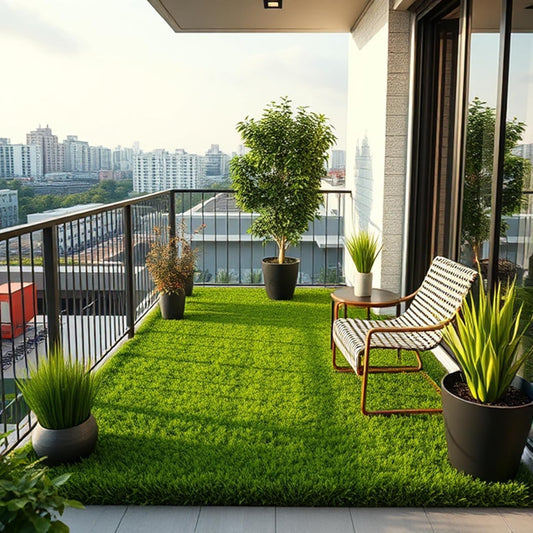
Bathrooms, kitchen sink areas, open balconies, or any ground-floor room that gets damp in monsoon. For balconies, artificial grass is the right product instead.
Thinking of layering?
A large jute rug as the base with a smaller patterned or shaggy carpet on top gives you full-size coverage and soft comfort where you actually sit. Tell us your room size and we will suggest the pair.
Types of jute rug
- Flat woven. Tight, low profile, easy to sweep. The most practical for high-traffic areas.
- Braided. Thick rope-like coils, often in round shapes. More texture, more substantial feel. See our round jute carpets.
- Jute blends. Mixed with cotton, wool or viscose for extra softness and colour. A good compromise if pure jute feels too coarse.
- Bordered jute. A fabric or leather binding at the edge gives a more finished, less rustic look.
How to clean a jute carpet
The rule is simple: dry cleaning methods only, as far as possible.
- Vacuum regularly with suction, not a rotating brush — the brush pulls at the weave. Vacuum both directions, because the weave traps grit in two planes.
- Shake or beat it outdoors every few weeks. Jute holds dust deep in the fibre.
- Blot spills instantly. Press a dry cloth down hard. The faster you lift the liquid, the less chance of a watermark.
- For dry spills, sprinkle baking soda or cornflour, leave for twenty minutes, then vacuum out.
- If you must use moisture, use a barely damp cloth on the spot only, then dry it immediately with a fan. Never soak.
- Dry any wet patch fully before laying furniture back. Trapped damp is what causes odour.
How long does jute last?
In a dry living room with normal footfall, a good jute rug lasts for years. Its lifespan depends far more on moisture exposure than on traffic. Rotate it every few months so the sun does not fade one section, and keep it away from persistently damp walls.
One honest note: jute does lighten with sun exposure over time. Some people like the softened tone; if you do not, rotation solves it.
Jute versus the alternatives
| Fibre | Softness | Water tolerance | Best for |
|---|---|---|---|
| Jute | Low | Poor | Texture, layering, dry rooms |
| Wool | High | Moderate | Long-term living room carpets |
| Microfibre shag | Very high | Good | Bedrooms, floor seating |
| Cotton flat weave | Medium | Good (washable) | Kids' rooms, kitchens |
Jute blends: the practical middle ground
If pure jute feels too coarse for a room where people sit on the floor, a blend solves it without losing the texture.
- Jute and cotton — softer underfoot and available in more colours. Handles light cleaning better than pure jute, though it still should not be soaked.
- Jute and wool — the most comfortable combination. Wool adds warmth and resilience, jute keeps the natural look and the price sensible.
- Jute and viscose — adds a subtle sheen. Looks refined, but viscose is delicate, so keep this one away from high traffic.
Blends are also more forgiving about shedding, which is the complaint we hear most about new pure-jute rugs.
What to layer on a jute base
Jute's most useful role in Indian homes is as the bottom layer. It gives you a large, affordable rug that covers the full furniture grouping, and then a smaller rug on top provides the softness.
Good combinations: a jute base with a shaggy rug in the seating zone, or a jute base with a patterned Persian piece centred on it. Keep the top rug at least two feet smaller on each side so the jute border reads as a deliberate frame.
Buying checklist for a jute rug
- Check the room is dry. Ground-floor rooms that get damp in monsoon are not suitable, whatever the rug costs.
- Decide flat weave or braided. Flat sweeps clean more easily; braided feels more substantial and suits round shapes.
- Look at the edge finish. A bound or bordered edge lasts considerably longer than a raw one.
- Plan for shedding in the first few weeks — it is normal and it stops.
- Buy the size the room needs. Jute's affordability is exactly what makes going large realistic here.
- Add a pad. Jute is firm and can slide on smooth floors.
How jute ages
Unlike synthetics, jute changes with time rather than simply wearing out. The colour softens and lightens where sun reaches it, and the surface becomes slightly smoother underfoot as the fibres settle. Many people prefer the aged look; if you do not, rotating the rug every few months keeps the tone even across the whole piece.
Frequently asked questions
Is a jute carpet good for a living room?
Yes — it is arguably the best room for jute. It adds texture, handles footfall and works with almost any furniture style, provided the room stays dry.
Can jute rugs get wet?
They should not. Jute absorbs water, dries slowly and can develop watermarks or odour. Blot spills immediately and never wash a jute rug with water.
Do jute rugs shed?
New ones shed loose fibres for the first few weeks. Vacuum more often at the start and it settles down.
Is jute soft underfoot?
No. Jute is textured rather than plush. For softness, layer a shaggy rug on top or choose a jute blend.
How do I clean a jute carpet at home?
Vacuum with suction only, shake it outdoors regularly, blot spills instantly, and use baking soda for dry cleaning. Avoid water wherever possible.
What does a jute carpet cost?
Our jute range starts at ₹2,999, with larger and braided pieces priced higher.
Bring natural texture home. Browse jute carpets and rugs from ₹2,999 and round jute rugs, or layer one under a soft shaggy carpet. Delivered across India — or see the weaves in person at our Delhi store.
Tags:
Related articles
-
Oct 07 2026
Round Carpets: Where They Work and What Size to Buy
-
Oct 03 2026