Carpet for Living Room: How to Choose Size, Material and Colour

Choosing a carpet for living room use is the one furnishing decision that changes how the whole room feels. Get the size right and the sofa, chairs and centre table suddenly look like a set. Get it wrong and an expensive rug ends up looking like a bath mat floating in the middle of the floor.
We sell over two thousand living room carpets, and the questions we hear are always the same three: what size, what material, and what colour. This guide answers all three in the order you should decide them.
Quick answer
For most Indian living rooms, a 6×9 ft or 5×8 ft carpet works best, placed so the front legs of the sofa rest on it. Choose hand-tufted wool or soft microfibre shag for comfort, and pick a colour two shades away from your sofa — not matching it. Living room carpets at Carpet Planet start at ₹2,399.

Step 1: Get the size right (this matters most)
Before you look at colour, settle the size. This is the carpet for living room sizing we give every customer who calls.
| Size | Room | How it sits |
|---|---|---|
| 3 × 5 ft | Bedside, entryway | Beside the bed, or just inside the door |
| 5 × 7 ft | Small living room, 10 × 12 ft | Front legs of the sofa resting on it |
| 6 × 9 ft | Standard living room, 12 × 15 ft | Sofa and chair front legs on it |
| 8 × 10 ft | Large living room, queen bed | All furniture legs fully on it |
| 9 × 12 ft | Big hall, king bed | The whole seating group sits inside |
Size is the decision people regret. A rug that is too small makes furniture look scattered; one that is too large swallows the room. Use the furniture, not the floor, to decide.
The three standard layouts
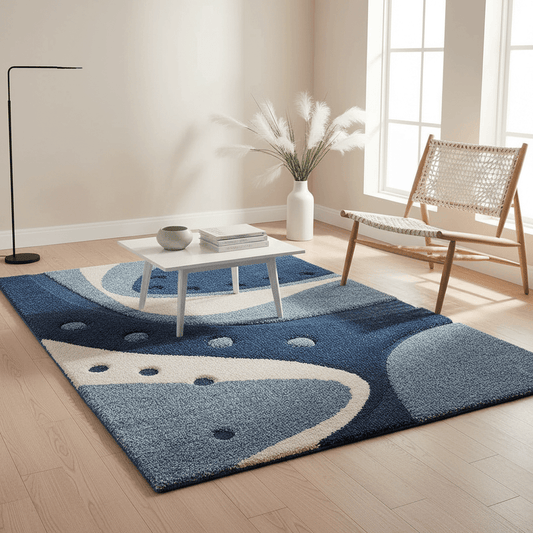
- Front legs on the rug. The most common and most forgiving layout. The carpet sits under the front legs of the sofa and chairs, with the centre table fully on it. This visually ties the seating together without needing a huge rug.
- All legs on the rug. The premium look. Every piece of furniture sits completely on the carpet, with a margin of floor showing around the edges. It needs a large room and a large rug.
- Floating rug. Only the centre table sits on the carpet. It works in compact flats and rental homes, but keep the rug wide enough to extend past the table on all sides.
Which size for which room
| Room / seating | Recommended size | Layout |
|---|---|---|
| Compact flat, 2-seater + chair | 4×6 ft | Floating, under the table |
| Standard 3+2 sofa set | 5×8 ft or 6×9 ft | Front legs on the rug |
| Large hall, L-shaped sofa | 8×11 ft | Front legs, or all legs |
| Open-plan living and dining | 9×12 ft | All legs on the rug |
A quick test before you order: mark the rug outline on your floor with newspaper or masking tape and leave it for a day. You will know immediately whether it feels right.
Step 2: Choose the material for how you live
Material decides how the carpet feels, how it wears, and how much cleaning it will demand. There is no single best option — there is a best option for your household.
Hand-tufted wool and wool blends
The classic living room choice. Wool is naturally resilient, holds colour beautifully and recovers well from furniture dents. It suits homes where the living room is used daily and you want the carpet to last. Browse hand-tufted carpets for this category.
Microfibre shag
If softness is the priority — families who sit on the floor, homes with small children — a shaggy carpet is hard to beat. The long pile feels plush underfoot and instantly warms up a tiled floor. It needs more frequent vacuuming, and it is not the right pick directly under a dining area.
Jute and natural fibre
A jute rug brings texture rather than softness. It is the most forgiving choice for high-traffic entry-side living rooms and layers beautifully under a smaller decorative rug. Keep it away from persistently damp corners.
Persian and traditional weaves
If your furniture is wooden and your room leans classic, a Persian or traditional carpet anchors the space in a way a plain rug cannot. Intricate patterns also hide everyday marks far better than solid colours.
Step 3: Pick a colour that works with your room
Here is the rule that saves most people: do not match your carpet to your sofa. Matching flattens the room. Instead, work two shades away.
- Dark sofa, light room? Choose an ivory, beige or soft grey carpet to lift the floor and bounce light.
- Light sofa, lots of daylight? A deeper rug — rust, teal, charcoal, moss — gives the seating something to sit against.
- Busy curtains or patterned upholstery? Go with a solid or textured carpet so the room has somewhere to rest.
- Plain walls and plain sofa? This is where a floral or abstract design earns its place as the focal point.
Two practical notes. First, very light carpets in a ground-floor living room near an entrance will show every footprint — be honest about your traffic. Second, always view colours in your own light; the same rug reads warmer under yellow bulbs and cooler under white ones.
Still deciding?
Tell us your room size and sofa colour and we will shortlist three carpets for you. Explore the full living room carpet collection — over 2,000 designs, from ₹2,399, delivered across India.
Shape: when to break out of the rectangle
Rectangles suit most living rooms because sofas are rectangular. But two alternatives are worth knowing.
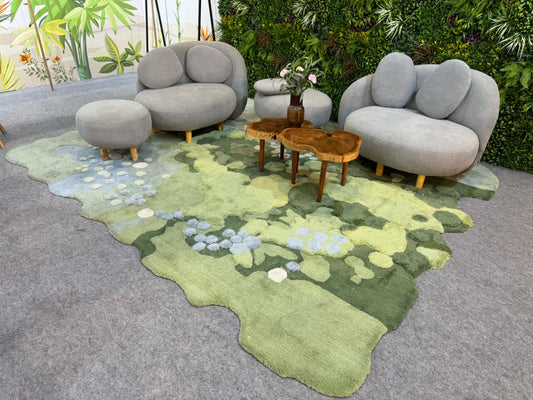
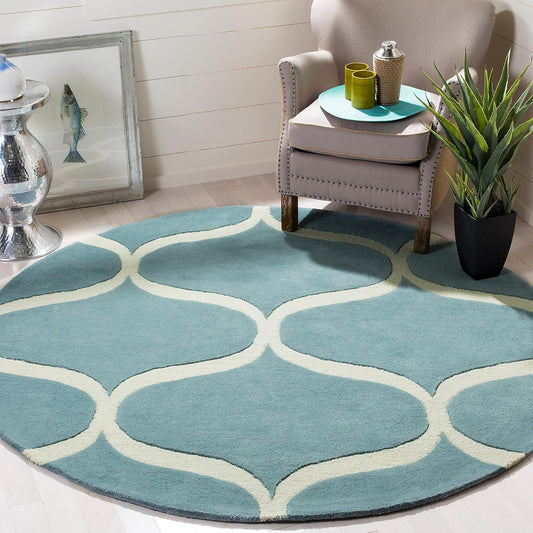
A round carpet softens a room full of straight lines and works beautifully under a round centre table or in a reading corner. An irregular shaped rug suits modern interiors where the carpet is meant to be noticed as a design object rather than blend in.
In both cases, measure the widest point and treat that as your size — an 8 ft round rug occupies roughly the footprint of an 8×8 ft square.
Pile height: comfort versus practicality
Pile is the length of the fibre standing up from the base. It changes everyday life with the carpet more than most buyers expect.
- Low pile is easy to vacuum, lets doors swing freely and suits rooms where chairs move often.
- Medium pile balances comfort and upkeep, and is the safest all-round choice.
- High pile or shag feels wonderful and hides crumbs, but needs regular shaking out and is harder to clean if something spills.
Check door clearance before buying high pile. A carpet that stops your living room door from opening is an annoying discovery.
Budget: what different price bands get you
Living room carpets in our range start at ₹2,399 and run into six figures for large hand-knotted pieces. Broadly:
- Entry level gets you machine-made and printed carpets in standard sizes — a good way to try a colour or style before committing.
- Mid range is where hand-tufted wool blends and quality shags sit. For most homes this is the sensible band: proper thickness, better recovery, longer life.
- Premium covers large sizes, hand-knotted construction and fine Persian weaves — pieces that stay with a family for decades.
One honest piece of advice: if your budget is tight, buy the correct size in a simpler quality rather than a smaller rug in a finer quality. Size is what makes the room work.

Care: what living room carpets actually need
Vacuum weekly, more often if you have pets. Rotate the carpet every few months so sunlight and footfall wear it evenly. Blot spills immediately with a dry cloth — never rub, because rubbing pushes the stain into the base. Use a rug pad underneath; it stops slipping, adds softness and genuinely extends the life of the carpet.
For a deeper background on carpet construction and fibre types, this general reference on carpets is a useful neutral read.
Layering: the trick that makes a small living room look bigger
If your room is compact and a large carpet feels heavy, layer instead. Put a flat, neutral base — a jute rug works perfectly — across the seating area, then place a smaller patterned or shaggy carpet on top, angled or centred under the table.
Layering does two useful things. It gives you the full-size coverage that makes furniture look grouped, while keeping the visual weight light. And it lets you change the top rug seasonally without re-buying the expensive base. A jute base with a shag on top is the combination that works most often in Indian flats.
A checklist before you place the order
Run through these five points and you will not be disappointed by the delivery:
- Measure twice, in feet. Note the sofa wall width and the distance from the sofa to the TV unit.
- Tape the outline on the floor and leave it overnight.
- Check the door swing if you are choosing a thick or shaggy pile.
- Hold the colour against your sofa in daylight, not just under evening lights.
- Add a rug pad to the cart — it prevents slipping and extends the carpet's life.
One last point worth making: buy for the room you have, not the room you are planning. People often size a carpet for furniture they intend to buy next year, and then live with a rug that does not fit for twelve months.
One last thing before you shop. A carpet for living room use is the purchase people regret buying small, and almost nobody regrets buying large. If you are caught between two sizes, take the bigger carpet for living room floors.
A carpet for living room floors, in stock now
Each of these is a carpet for living room use that we keep in stock in the common sizes. Prices shown are for the piece, delivered free.


Free shipping
Across India, taxes included
Dispatch in 24 hours
Business hours; custom sizes 5–7 days
100% handcrafted
Woven in Bhadohi, not machine printed
50,000+ customers
Six years of direct selling

Pick your carpet for living room floors
Every size from 5 by 7 to 10 by 13, in wool, jute and shaggy. Free delivery across India, dispatched within 24 business hours.
Frequently asked questions
What size carpet for living room with a 3+2 sofa set?
A 5×8 ft or 6×9 ft carpet works for most 3+2 arrangements, placed so the front legs of both sofas rest on the rug and the centre table sits fully on it.
Should the carpet be darker or lighter than the sofa?
Either works, as long as it is not the same shade. Aim for a clear contrast of at least two shades so the sofa reads as a separate object from the floor.
Is a shaggy carpet a good idea for a living room?
Yes, if comfort matters more than low maintenance and the room is not directly attached to a dining space. Shag feels excellent underfoot but needs more frequent vacuuming.
How do I stop my living room carpet from slipping?
Use an anti-slip rug pad sized slightly smaller than the carpet. It also cushions the rug and reduces wear from below.
What is the cheapest good-quality carpet for a living room?
Our living room range begins at ₹2,399. At the lower end you will find machine-made and printed designs in standard sizes, which are a practical starting point for a first carpet.
Can I use one large carpet for an open living and dining area?
You can, and a 9×12 ft size usually covers both zones. Many people prefer two separate carpets instead, so the dining area can take a flatter, easier-to-clean rug.
Ready to choose? Browse the complete carpet for living room collection — shaggy, hand-tufted, Persian and jute, in every standard size, with free delivery across India. Prefer to see them in person? Visit our Delhi showroom.
Written by the Carpet Planet team. We have sold handcrafted carpets direct from Bhadohi since 2020, to more than 50,000 homes across India, and we see which sizes and materials come back and which do not. Questions on a specific room? Visit us at C-74, Shivalik Road, Malviya Nagar, New Delhi, or call +91 98915 06789.
Tags:
Previous
Artificial Grass Carpet Price in India (2026): 25mm to 50mm Cost Guide
Next
Carpet Size Guide India: Which Rug Size Actually Fits Your Room?
Related articles
-
Oct 07 2026
Round Carpets: Where They Work and What Size to Buy
-
Oct 03 2026